Licensing experts who've been in the room with regulators.
When your licensing hits a roadblock, this is who you call.

licenses under management
Standing seat on the Financial Innovation Advisory Board
Direct engagement on DFAL implementation
A compliance team drawn from Block, Robinhood, Airwallex, and Caliber Home Loans
Every Brico account has a named licensing expert who owns the strategy and prepares the filings. They work with state regulators on an ongoing basis, so when something comes back that the checklist didn't anticipate, they've seen it before.
Built for teams managing money transmission, digital assets, lending, and mortgage license compliance across multiple states.
What your licensing expert actually does
Getting your first licenses
Application prep, explanation of definitions and jargon, regulatory-ready document drafting, help avoiding regulator red flags, and coaching around how to respond to deficiencies.

Expanding into new states
Explaining additional obligations, plus adapting your existing application materials to the new states’ requirements.

Adding a product line
A new product means new licensing obligations. Your expert can work through how this impacts your organization and plan for the near, medium and long term.

Ongoing readiness
Renewals, quarterly and annual reports, advance change notices, and exam preparation, handled on with visibility.

Staying ahead of changes
Brico monitors rules and regulations at the federal and state level and tells you when a change creates a new license requirement, so you hear about it before it applies to you.

What being close to the process looks like
In spring 2026, DFAL applicants ran into a major problem.
Insurers set their own bar for DFAL surety bonds: $10 million in net worth, against California's $100,000 requirement.
Roughly 75% of companies seeking a DFAL bond were expected to be turned away.
DFPI removes the bond as a prerequisite for a substantially complete application.
Applicants can file by the deadline instead of waiting on the insurance market.
California's Digital Financial Assets Law set the tangible net worth threshold for DFAL applicants at $100,000, accessible for a broad range of fintechs. But surety bonds have to be underwritten by insurers, and insurers pricing a brand-new asset class with no historical loss data set their own bar: $10 million in net worth, plus multiple years of positive earnings.
By June 2026, roughly 75% of companies seeking a DFAL bond were expected to be turned away. With the filing deadline weeks out, those companies were facing a hard stop for reasons that had nothing to do with whether they met California's actual licensing requirements.
DFPI engaged directly with industry practitioners throughout DFAL's rollout, including on concerns about the bond structure. Our VP of Operations and Compliance, Christina Luk, was part of those ongoing conversations with the Department. When the insurance market response confirmed the problem at scale, DFPI's senior leadership assessed the policy and economic consequences and removed the bond as a prerequisite for submitting a substantially complete application ahead of the July 1, 2026 deadline.
We didn't change the process. DFPI did.
But we were close enough to the process to see the problem forming, and credible enough to raise it in a way that got heard. For DFAL applicants, that was the difference between filing by July 1 and waiting for an insurance market that wasn't going to move.
Compliance Leadership
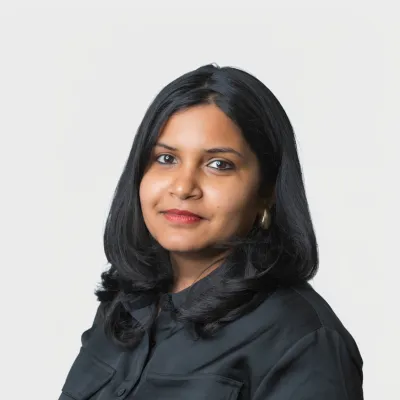
Snigdha spent years building consumer financial products at Digit, where she was Head of Product Operations through the company's acquisition by Oportun. She saw the licensing problem from the inside: the months of work, the legal spend, and the way it quietly sets the ceiling on how fast a financial company can grow. She started Brico in 2023 to make licensing something a company builds once instead of rebuilding in every state. Snigdha sits on the Financial Innovation Advisory Board at the New York State Department of Financial Services, advising regulators directly on where technology can responsibly modernize financial oversight. She holds a Master's in Public Policy from Harvard Kennedy School. She's also a sought after speaker, and has spoken extensively on fintech and licensing at Money20/20.
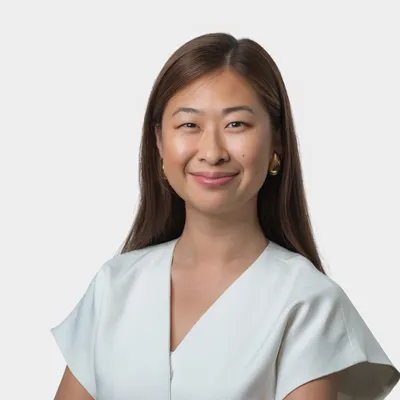
Christina has spent her career inside fintech compliance, holding senior roles at TrueAccord and Next Insurance, and across practically every regulated corner of financial services, before joining Brico's founding team. She's seen licensing from every angle: on a one-person compliance team and at a global company, and it was always the same story: manual, slow, and under-supported. At Brico, she advises customers on regulatory compliance and strategy, manages Brico's team of licensing experts, and was part of the direct conversations with DFPI that led to the DFAL surety bond change. She holds a B.A. in Legal Studies from UC Berkeley. Christina regularly speaks on state licensing and compliance at industry events, including NMLS, ACAMS and MTRA.
Advised by
Brico's advisors have sat on the regulator's side of the table and inside the law firms that practice this exact area of law. Compliance judgment shaped by people with decades of experience.
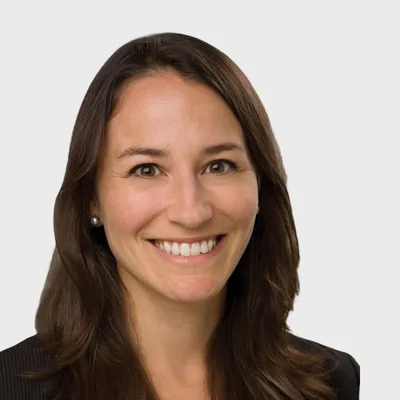
Molly Swartz
Practices directly in state money transmission and licensed lending law, plus BSA, TILA, ECOA, and FCRA. Recognized as a Law360 Rising Star and Legal 500 Next Generation Partner.
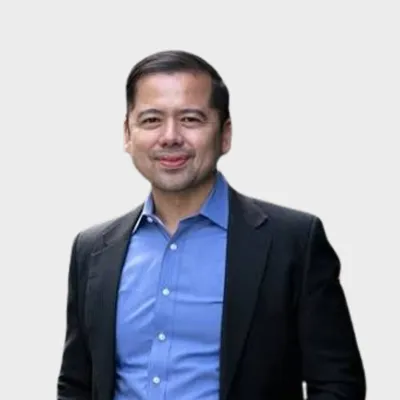
Jobe Danganan
Formerly an Enforcement Attorney at the Consumer Financial Protection Bureau (CFPB), and General Counsel at HomeLight and Near.
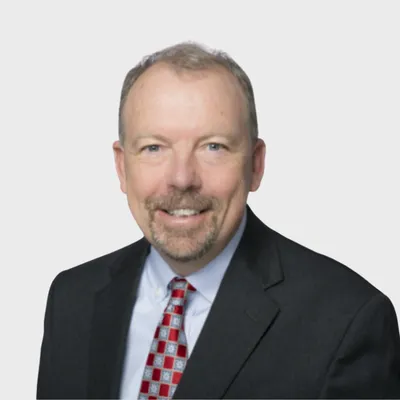
Todd H. Baker
Career spanning C-suite roles at major banks; Senior Fellow at Columbia Business School's Richman Center and fintech law instructor at Columbia and Stanford.
The broader compliance team
Brico's compliance team is built from people who've worked inside the institutions they now help license, including prior roles at Block, Airwallex, OFX, Ria Financial, Instawork, Robinhood, Caliber Home Loans, Bank of America, New American Funding, and American Financial Network.





Brico pairs smart automation with dedicated hands-on support, reaching out to regulators, keeping our filings on track, and making sure nothing falls through the cracks. Brico isn't just a service; they're a real partner.
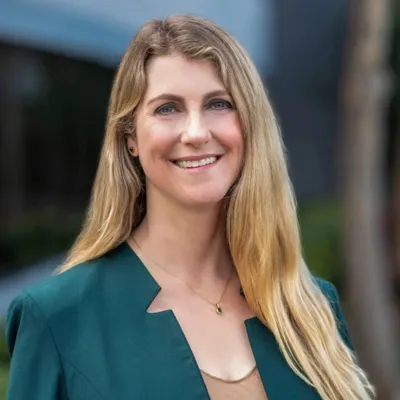
Kristen Hecht
Chief Compliance Officer, 1Money USA, Inc.
Get licensed in your next state. Faster.
Brico's licensing experts manage your licenses in all 50 states, from applications to renewals and reporting.
