Lending licenses are your authority to originate loans. Without them, you can't legally offer consumer finance products, installment loans, commercial credit, or other lending services in most states. And like all state licenses, they come with a requirement that's easy to overlook: maintaining corporate good standing.
A missed Secretary of State filing can put your lending authority at risk. State regulators require licensees to maintain good standing as a condition of holding a license. Fall out of compliance, and you could face deficiency notices, examination findings, or suspension of your ability to originate new loans.
This guide covers what lending license holders need to know about good standing requirements: which states enforce most aggressively, how lapses affect different license types, and how to build systems that prevent costly compliance failures.
Related: What is a Certificate of Good Standing and Why Does it Matter?
Why Good Standing Matters for Lenders
State lending regulators review your underwriting standards and consumer disclosures, and they verify that your company is legally authorized to operate. Good standing confirmation happens at multiple points:
- License applications: You can't obtain a lending license without proving good standing in your formation state and every state where you're registered
- Annual renewals: Most states require updated certificates of good standing with renewal filings
- Examinations: Examiners verify corporate status as standard examination procedure
- Complaint investigations: Consumer complaints may trigger a corporate status check
- Ongoing monitoring: Some regulators run periodic good standing checks between examinations
If you're not in good standing when regulators check, you'll receive a deficiency notice and your response becomes part of your permanent examination record.
Related: Consumer Loan Servicer Licensing: Requirements and State-by-State Guide
Types of Lending Licenses Affected
Good standing requirements apply to all state-issued lending authorizations. The specific license names vary by state, but generally include:
Consumer Finance Licenses
Authorizes lending to individuals for personal, family, or household purposes. Often called:
- Consumer Lender License
- Consumer Finance License
- Consumer Loan License
- Personal Loan License
- Supervised Lender License
Key states: California (CFL and CFLL), New York, Texas, Illinois, Florida, Georgia, Ohio, Pennsylvania
Installment Loan Licenses
Authorizes loans repaid in scheduled installments over time. May be:
- Installment Loan License
- Installment Lender License
- Small Loan License (for loans under state-specific thresholds)
Key states: Illinois, Ohio, Indiana, Missouri, Virginia, Wisconsin
Commercial Lending Licenses
Authorizes business-purpose loans. Requirements vary significantly:
- Some states require licenses for all commercial lending
- Others only regulate loans to small businesses
- Some exempt commercial lending entirely
Key states: California (CFL for some commercial loans), Florida, New York (commercial finance disclosure requirements), Virginia
Sales Finance Licenses
Authorizes financing of retail installment sales (auto loans, equipment financing, retail credit):
- Sales Finance Company License
- Retail Installment Sales License
- Motor Vehicle Sales Finance License
Key states: All states with retail installment sales acts
Other Lending Authorizations
- Payday/Deferred Deposit Licenses: Short-term, small-dollar lending
- Title Loan Licenses: Secured by vehicle titles
- Industrial Loan Licenses: Specialized lending structures
- Premium Finance Licenses: Financing of insurance premiums
State-by-State Enforcement: Who's Most Aggressive?
Lending regulators vary in how strictly they enforce good standing requirements. Here's how states compare:
Tier 1: Aggressive Enforcement
These states actively monitor good standing and move quickly on lapses:
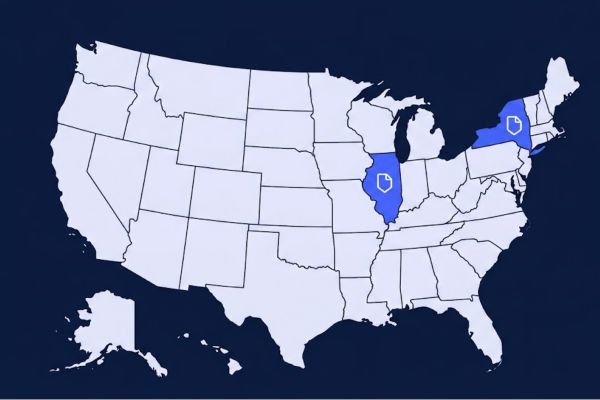
California (DFPI) The Department of Financial Protection and Innovation regulates both the California Finance Lender License (CFL) and California Financing Law License (CFLL). DFPI is known for proactive monitoring and coordinates with the Franchise Tax Board on corporate compliance. California's examination staff routinely verify good standing, and DFPI has issued deficiency notices based on routine checks—not just examination findings.
New York (DFS) The Department of Financial Services maintains strict oversight of licensed lenders e.g., via NMLS renewals. DFS has a sophisticated examination program and low tolerance for corporate compliance failures. The state's commercial finance disclosure law has also increased regulatory attention on lending activities.
Texas (OCCC) The Office of Consumer Credit Commissioner takes enforcement seriously. Texas has a fast corporate forfeiture timeline (120 days for franchise tax issues), and OCCC expects licensees to maintain clean corporate records.
Illinois (IDFPR) The Illinois Department of Financial and Professional Regulation has an active consumer credit examination program. Illinois coordinates with the Secretary of State on corporate status and requires good standing for license renewals.
Tier 2: Moderate Enforcement
These states enforce good standing requirements but typically allow reasonable cure periods:
| State |
NMLS? |
Regulator |
Notes |
| Florida |
Yes |
OFR |
Active examination program; verifies standing during renewals |
| Georgia |
Yes |
DBF |
Growing fintech presence has increased examination activity |
| Ohio |
Yes |
DFI |
Standard verification during examinations and renewals |
| Pennsylvania |
Partial |
DOBS |
Thorough examinations; good standing verified routinely |
| New Jersey |
Yes |
DOBI |
Standard enforcement; reasonable cure periods |
| Virginia |
Yes |
SCC |
Bureau of Financial Institutions verifies standing |
| Maryland |
Yes |
OCFR |
Increasing enforcement activity in recent years |
| Indiana |
Yes |
DFI |
Standard enforcement for consumer credit licenses |
Tier 3: Standard Enforcement
These states verify good standing but typically aren't proactive about monitoring between examinations:
| State |
NMLS? |
Regulator |
Notes |
| Arizona |
Partial |
DIFI |
Verifies during renewals and examinations |
| Colorado |
Partial |
DORA |
Standard enforcement approach |
| Michigan |
Yes |
DIFS |
Verifies standing; standard cure periods |
| Minnesota |
Yes |
Commerce |
Standard examination procedures |
| Nevada |
Yes |
FID |
Verifies standing; reasonable cure periods |
| Missouri |
Partial |
Finance |
Standard enforcement |
| Utah |
Yes |
DFI |
Standard enforcement |
| Washington |
Yes |
DFI |
Verifies standing during examinations |
*Regulator practices evolve; verify current requirements via state exam manuals, NMLS checklists, or direct regulator contact.
What Happens When You Lose Good Standing
The enforcement progression for lending license holders typically follows this pattern:
Stage 1: Deficiency Notice (Immediate to 30 Days)
Once a regulator identifies a good standing lapse, they'll issue a deficiency notice requiring you to:
- Reinstate your corporate registration
- Provide a certificate of good standing
- Explain what caused the lapse
- Describe remedial measures to prevent recurrence
Typical cure period: 30-60 days, though some states require faster response.
Stage 2: Examination Finding
If the lapse is discovered during examination, it becomes a formal finding. Your examination response must address:
- Root cause of the compliance failure
- Corrective actions taken
- Preventive controls implemented
The finding remains in your examination history and may be referenced in future examinations.
Stage 3: Lending Restrictions
If you don't cure the lapse promptly, regulators may restrict your lending authority:
- Suspension of origination authority: You cannot make new loans in that state
- Servicing restrictions: Existing loan portfolios may face limitations
- Consumer notification requirements: Some states require you to notify borrowers of licensing status changes
Stage 4: Consent Order or Civil Penalties
Continued non-compliance or repeat offenses can result in:
- Consent orders with specific compliance milestones
- Civil money penalties
- Increased examination frequency
- Third-party compliance audits at your expense
Stage 5: License Revocation
Outright revocation for a good standing lapse alone is rare, but it can happen if:
- The lapse is part of a pattern of compliance failures
- You failed to respond to deficiency notices
- Other examination findings compound the issue
- The underlying corporate entity was dissolved
Related: BNPL Licensing Requirements by State: What Providers Need to Know
Special Considerations for Lending License Holders
Multi-State Coordination
State lending regulators increasingly share information:
- NMLS reporting: Many lending licenses are managed through NMLS, which may flag compliance issues visible to multiple states
- Multi-state examination coordination: Examination findings may be shared with other states where you're licensed
- State compact agreements: Some states have formal information-sharing arrangements
A compliance failure in one state can cascade to others.
Impact on Loan Enforceability
In some states, loans originated while not in good standing may face enforceability challenges:
- Borrowers may challenge collection efforts based on licensing deficiencies
- Courts have found loans unenforceable when originated by unlicensed lenders
- Even if you reinstate, loans made during the lapse period may be tainted
This creates legal risk beyond just regulatory consequences.
Bank Partnership Implications
If you originate loans through a bank partnership model, your partner bank likely requires you to maintain good standing as a condition of the relationship. A lapse could:
- Trigger reporting obligations to your bank partner
- Result in suspension of origination privileges
- In severe cases, terminate the partnership agreement
Investor and Warehouse Lender Due Diligence
Loan buyers and warehouse lenders verify licensing status before purchasing or financing loans. A good standing lapse can:
- Delay or block loan sales
- Trigger repurchase obligations
- Create ineligibility for warehouse advances
- Damage relationships with capital partners
How to Maintain Good Standing Across All States
The Challenge: Multiple License Types, Multiple States
Lenders often hold multiple license types across multiple states. A consumer lender operating in 25 states with both consumer finance and sales finance licenses might manage:
- 25+ Secretary of State annual report deadlines
- 50+ lending license renewal deadlines
- 25+ registered agent relationships
- Quarterly call reports
- Annual financial statement submissions
Manual tracking becomes unmanageable as you scale.
Building Compliant Processes
Even with automation, sound processes matter:
Assign Clear Ownership Designate primary and backup owners for compliance. Document responsibilities so coverage continues through employee transitions.
Establish Review Workflows Route filings through appropriate approvals before submission. Brico supports task assignment and collaboration to ensure proper review.
Conduct Quarterly Audits Verify good standing across all states quarterly. Catch issues early before they compound.
Maintain Documentation Standards Store all compliance documentation in one system. Complete records protect you during examinations.
What to Do If You Discover a Lapse
Step 1: Assess the Scope
Determine:
- Which states are affected
- Which license types are at risk
- How long you've been out of compliance
- Whether any examination, renewal, or loan sale is pending
Step 2: Reinstate Immediately
File all missing annual reports, pay all fees and penalties, and obtain certificates of good standing. Speed matters: every day increases risk to your lending authority.
Step 3: Evaluate Loan Portfolio Impact
Review loans originated during the lapse period:
- Consult legal counsel on enforceability risks
- Determine disclosure or remediation obligations
- Assess impact on pending loan sales or securitizations
Step 4: Notify Stakeholders Proactively
Contact regulators, bank partners, and warehouse lenders before they discover the issue themselves. A sample disclosure:
"[Company] identified that our annual report filing with the [State] Secretary of State was not completed by the deadline due to [brief explanation]. We have reinstated our good standing (documentation attached) and implemented additional controls to prevent recurrence, including [specific measures]. We are reviewing our loan portfolio for any impact during the lapse period and will provide additional information as appropriate."
Proactive disclosure demonstrates good faith and typically results in more favorable treatment.
Step 5: Update Your Procedures
Diagnose what failed:
- Was ownership unclear?
- Did manual tracking break down?
- Was there a personnel transition?
- Are you managing too many licenses to track manually?
For many lenders, a compliance lapse is the trigger that moves them from spreadsheets to purpose-built compliance automation.
Protect Your Lending Authority
Your lending licenses represent significant investment and enable your core business. Protecting them means treating corporate compliance with the same rigor you apply to underwriting, servicing, and regulatory examinations.
Good standing requirements are straightforward: file your annual reports on time, pay your fees, maintain your registered agent. But across multiple states and license types, manual tracking becomes error-prone. The lenders that never miss deadlines are the ones that have automated the process.
Ready to eliminate compliance gaps? Schedule a Brico demo to see how fintechs and lending companies manage license renewals and good standing across all 50 states—without the manual tracking, missed deadlines, or examination surprises.
Disclaimer: This article is for informational purposes only and does not constitute legal, financial, or regulatory advice. Brico is not a law firm and does not provide legal counsel. Licensing requirements vary by state and depend on your specific business model and circumstances. You should consult with qualified legal counsel before making any licensing decisions or taking action based on this content.
.png)