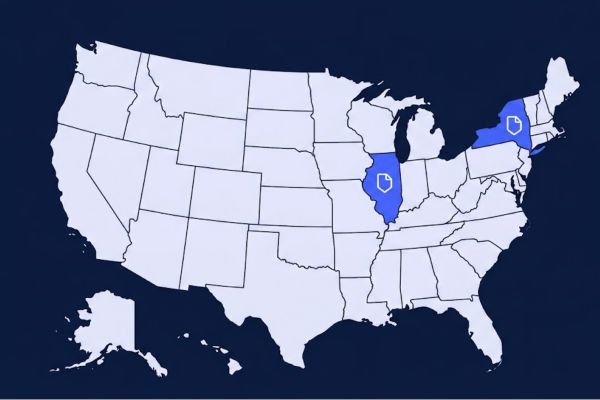


Nearly every state manages mortgage lender, broker, and loan originator licenses through NMLS—the Nationwide Multistate Licensing System. This centralization creates efficiency, but it also means compliance failures are visible across your entire license portfolio instantly.
A missed Secretary of State filing in one state doesn't just affect that state's license. NMLS can flag the issue, alerting regulators in every state where you're licensed. What starts as a single administrative oversight can cascade into a multi-state compliance event.
This guide covers what mortgage license holders need to know about good standing requirements: how NMLS surfaces compliance issues, which states enforce most aggressively, and how to protect your origination authority across all jurisdictions.
Why Good Standing Is Critical for Mortgage Licensees
Mortgage regulators verify corporate good standing as a baseline compliance requirement. But unlike standalone state licenses, mortgage licenses are interconnected through NMLS—creating unique risks and visibility.
How NMLS Changes the Equation
NMLS serves as the central system of record for mortgage licensing in 62 jurisdictions (50 states, DC, Puerto Rico, and US territories). This means:
- Centralized status visibility: Your license status in every state is visible in one system
- Automated compliance checks: NMLS can flag corporate status issues automatically
- Regulator coordination: State regulators can see compliance issues across jurisdictions
- Renewal synchronization: Many states have aligned renewal windows, concentrating compliance activity
When you fall out of good standing, NMLS doesn't keep it a secret. The system is designed to surface compliance issues—which means a single lapse can trigger questions from multiple regulators simultaneously.
Good Standing Verification Touchpoints
Mortgage regulators check corporate status at multiple points:
- Initial license application: NMLS requires proof of good standing from formation state and foreign-qualified states
- Annual renewals: Most states require good standing confirmation during the November 1 – December 31 renewal window
- MU1 and MU4 filings: Company and individual filings may trigger status verification
- Examinations: State and CFPB examiners verify corporate status during fieldwork
- Complaint investigations: Consumer complaints may prompt a corporate status check
- Ongoing monitoring: NMLS and state regulators may conduct periodic compliance checks
Types of Mortgage Licenses Affected
Good standing requirements apply to all mortgage-related licenses managed through NMLS:
Mortgage Lender License (MU1)
Authorizes a company to make mortgage loans directly to consumers. Required in most states for:
- Direct-to-consumer mortgage origination
- Correspondent lending
- Warehouse lending (in some states)
- Table funding arrangements
NMLS filing: MU1 (Company/Branch - Mortgage)
Mortgage Broker License (MU1)
Authorizes a company to broker mortgage loans—connecting borrowers with lenders without funding loans directly.
NMLS filing: MU1 (Company/Branch - Mortgage)
Mortgage Loan Originator License (MU4)
Individual license required for anyone who takes residential mortgage loan applications or negotiates loan terms. MLOs must be sponsored by a licensed company.
NMLS filing: MU4 (Individual)
Good standing impact: If the sponsoring company loses good standing, MLO licenses may be affected. MLOs cannot originate if their sponsor's license is suspended or revoked.
Mortgage Servicer License
Authorizes servicing of mortgage loans (collecting payments, managing escrow, loss mitigation). Some states require separate servicer licenses; others include servicing authority in lender licenses.
NMLS filing: MU1 (where applicable)
Third-Party Service Provider Registration
Some states require registration for mortgage-related service providers (appraisal management companies, settlement agents, etc.). Good standing requirements vary by state.
The NMLS Renewal Window: A Critical Compliance Period
Unlike other license types with staggered deadlines throughout the year, NMLS mortgage license renewals are concentrated in a single window:
Why This Matters for Good Standing
The concentrated renewal window creates a compliance crunch:
- All states check good standing simultaneously: If you're out of good standing anywhere, it surfaces during renewal
- Limited cure time: Deficiencies identified in December may have tight cure deadlines
- Cascading failures: A good standing lapse in your formation state can block renewals everywhere
- MLO impact: If company licenses aren't renewed, sponsored MLOs can't originate
Pre-Renewal Good Standing Audit
Smart mortgage companies conduct a good standing audit in October—before the renewal window opens:
- Verify good standing in formation state
- Verify good standing in every foreign-qualified state
- Confirm all annual reports are filed
- Ensure registered agent information is current
- Resolve any outstanding corporate issues
Discovering a good standing lapse in December leaves little time to cure before renewals are due.
State-by-State Enforcement: Who's Most Aggressive?
While NMLS centralizes license management, enforcement still happens at the state level. Some states are more aggressive than others:
Tier 1: Aggressive Enforcement
These states actively monitor compliance and move quickly on lapses:
New York (DFS) The Department of Financial Services maintains strict oversight of mortgage licensees. DFS conducts thorough examinations, has dedicated mortgage supervision staff, and has low tolerance for corporate compliance failures. Good standing lapses result in immediate deficiency notices with short cure periods.
California (DFPI) The Department of Financial Protection and Innovation oversees the largest mortgage market in the country. DFPI is known for proactive monitoring and coordinates with the Franchise Tax Board on corporate status. California examination staff routinely verify good standing.
Texas (SML) The Department of Savings and Mortgage Lending takes enforcement seriously. Texas has a fast corporate forfeiture timeline, and SML expects licensees to maintain clean records. The state's examination program is active and thorough.
Massachusetts (DOB) The Division of Banks has historically been aggressive on mortgage compliance. Massachusetts was among the first states to take action against subprime lenders and maintains rigorous oversight.
Illinois (IDFPR) The Illinois Department of Financial and Professional Regulation has an active mortgage examination program and coordinates with the Secretary of State on corporate status.
Tier 2: Moderate Enforcement
Tier 3: Standard Enforcement
What Happens When You Lose Good Standing
The enforcement progression for mortgage licensees follows a predictable pattern—but the NMLS visibility accelerates the timeline:
Stage 1: NMLS Flags the Issue
NMLS may automatically flag good standing issues based on:
- State database integrations
- Renewal submission review
- Regulator-initiated status checks
Once flagged, the issue is visible to all state regulators in NMLS.
Stage 2: Deficiency Notice (Immediate to 30 Days)
State regulators issue deficiency notices requiring:
- Reinstatement of corporate registration
- Certificate of good standing
- Explanation of the lapse
- Remedial measures to prevent recurrence
During renewal season: Deficiencies must typically be cured before renewal approval. Failure to cure by state deadlines can result in license expiration.
Stage 3: Renewal Denial or License Suspension
If deficiencies aren't cured:
- Renewal denied: License expires; you must reapply
- License suspended: Origination authority halted pending reinstatement
- MLO impact: Sponsored originators cannot work under a suspended license
Stage 4: Examination Finding and Enhanced Scrutiny
Good standing lapses become examination findings that:
- Remain in your NMLS record
- May be reviewed by other states
- Can trigger increased examination frequency
- Affect future license applications in new states
Stage 5: Multi-State Coordination
State regulators coordinate through:
- NMLS visibility: All regulators see your compliance record
- Multi-state examination program: CSBS coordinates multi-state mortgage examinations
- Information sharing: Findings in one state may prompt inquiries from others
A compliance failure that might stay contained with other license types becomes a multi-state event for mortgage licensees.
Impact on MLOs: When Company Compliance Affects Individuals
Mortgage Loan Originators are licensed as individuals but must be sponsored by a licensed company. This creates a dependency:
If the Company Loses Good Standing
- MLO origination authority: MLOs cannot originate loans if their sponsor's license is suspended or expired
- Sponsorship gaps: If the company license lapses, MLOs may show as "not authorized to conduct business" in NMLS
- Individual record impact: MLOs associated with compliance failures may face questions on future sponsorship applications
- Career disruption: MLOs may need to find new sponsorship if company issues aren't resolved quickly
Protecting Your MLO Team
- Communicate proactively about compliance status
- Resolve corporate issues before they affect individual licenses
- Have contingency plans for sponsorship if needed
- Document that MLOs were not personally responsible for company compliance failures
The CFPB Factor: Federal Oversight Adds Another Layer
Unlike state-only licenses, mortgage companies face federal oversight from the Consumer Financial Protection Bureau:
CFPB Examination Authority
The CFPB examines larger mortgage companies directly and participates in state examinations. CFPB examiners:
- Review corporate compliance as part of examination fieldwork
- May identify good standing issues during federal examinations
- Coordinate findings with state regulators
Enforcement Coordination
CFPB and state regulators share information. A good standing lapse identified during a CFPB examination may be communicated to state regulators—and vice versa.
Compliance Management System Expectations
CFPB expects mortgage companies to maintain robust compliance management systems. Repeated good standing lapses may be cited as evidence of CMS deficiencies, leading to broader remediation requirements.
How to Maintain Good Standing for Mortgage Licenses
The Challenge: Concentrated Deadlines, High Visibility
Mortgage license compliance has unique challenges:
- Renewal window concentration: All states renew in November–December
- NMLS visibility: Compliance issues are immediately visible to all regulators
- MLO dependencies: Company compliance affects individual licensees
- Federal overlay: CFPB adds another layer of oversight
Pre-Renewal Compliance Checklist (October)
Complete this audit before the NMLS renewal window opens:
Corporate Compliance
- [ ] Verify good standing in formation state
- [ ] Verify good standing in all foreign-qualified states
- [ ] Confirm all Secretary of State annual reports are filed
- [ ] Ensure franchise taxes are current (Delaware, Texas, etc.)
- [ ] Verify registered agent information is current in all states
NMLS Compliance
- [ ] Review MU1 for accuracy
- [ ] Update any changed company information
- [ ] Verify branch registrations are current
- [ ] Confirm control person information is accurate
- [ ] Review MLO sponsorships for accuracy
Financial Requirements
- [ ] Confirm surety bonds are current and adequate
- [ ] Verify net worth meets all state requirements
- [ ] Prepare financial statements for submission
How Brico Manages Mortgage License Compliance
Brico's platform addresses the unique challenges mortgage companies face:
Unified NMLS and Corporate Tracking See your entire compliance picture in one dashboard: NMLS renewal deadlines alongside Secretary of State filings, surety bond renewals, and financial statement submissions. No more managing corporate and license compliance in separate systems.
Pre-Renewal Audit Automation Brico alerts you to good standing issues before the November renewal window opens, giving you time to cure deficiencies before they block renewals.
Deadline Synchronization The platform understands that mortgage renewals are concentrated in Q4. Reminders and workflows are calibrated to the mortgage compliance calendar, not generic filing schedules.
MLO Management Track company license status alongside MLO sponsorships. Surface issues that could affect your origination team before they impact individuals.
Multi-State Visibility When NMLS shows your status to 50+ regulators, you need to see what they see. Brico provides the same cross-state visibility so you can address issues before regulators flag them.
Examination-Ready Documentation Every filing, status change, and remediation is logged. When state or CFPB examiners request compliance documentation, produce a complete audit trail instantly.
What to Do If You Discover a Lapse
Step 1: Assess NMLS Impact
Determine:
- Which states are affected
- Whether NMLS has flagged the issue
- Impact on renewal status (especially October–January)
- Whether MLO sponsorships are affected
Step 2: Reinstate Immediately
File all missing annual reports, pay all fees and penalties, and obtain certificates of good standing. During renewal season, every day matters.
Step 3: Update NMLS
Once reinstated:
- Upload new certificates of good standing to NMLS
- Respond to any deficiency items
- Verify license status shows as current
Step 4: Notify Regulators Proactively
Contact state regulators before they contact you. Sample disclosure:
"[Company] identified that our annual report filing with the [State] Secretary of State was not completed by the deadline due to [brief explanation]. We have reinstated our good standing (documentation attached) and updated NMLS accordingly. We have implemented additional controls to prevent recurrence, including [specific measures]. Please let us know if you require any additional information for our pending renewal."
Step 5: Communicate with MLOs
If the lapse affected sponsorship status:
- Inform affected MLOs promptly
- Provide timeline for resolution
- Document that origination was suspended during the gap (if applicable)
- Confirm restoration of sponsorship status
Step 6: Update Procedures
Diagnose what failed and implement fixes:
- Add good standing verification to pre-renewal checklist
- Implement quarterly corporate compliance audits
- Consider automation if manual tracking failed
- Ensure backup ownership during personnel transitions
Protect Your Mortgage Origination Authority
Mortgage licensing through NMLS offers efficiency, but it also means compliance failures are instantly visible across your entire license portfolio. A single missed Secretary of State filing can trigger deficiency notices from multiple states simultaneously.
The concentrated renewal window in November–December creates a compliance crunch. Companies that discover good standing issues in December have little time to cure before licenses expire.
The mortgage companies that navigate renewal season smoothly are the ones that audit compliance in October, maintain good standing year-round, and use systems that surface issues before regulators do.
Ready to eliminate renewal season stress? Schedule a Brico demo to see how mortgage lenders and brokers manage NMLS renewals and good standing across all states—with automated tracking, pre-renewal audits, and examination-ready documentation.
Disclaimer: This article is for informational purposes only and does not constitute legal, financial, or regulatory advice. Brico is not a law firm and does not provide legal counsel. Licensing requirements vary by state and depend on your specific business model and circumstances. You should consult with qualified legal counsel before making any licensing decisions or taking action based on this content.