
.png)
Obtaining a New York money transmitter license requires navigating a rigorous application process, managing distinct licensing regimes for fiat and crypto, and demonstrating deep operational readiness to a notoriously thorough regulator. This guide walks you through the exact steps, requirements, timelines, and pitfalls to avoid—and shows how a compliance platform like Brico can compress months of work into a coordinated process.
Why New York Money Transmitter Licenses Matter
What New York does today, other states tend to do tomorrow. Compliance decisions made in Albany influence how other states approach fintech regulation.
More practically, New York is home to the largest concentration of financial institutions, venture capital, and fintech founders in the US. If your customers include New York residents or you're raising venture capital, a New York money transmitter license is a credibility marker that proves you can operate under the nation's toughest regulatory regime.
A New York money transmitter license is distinct from—and in addition to—your federal Money Services Business (MSB) registration with FinCEN. While FinCEN establishes baseline AML/sanctions compliance, New York's Department of Financial Services (NYDFS) independently evaluates your operational capability, capital structure, and compliance infrastructure. The bar is high: NYDFS has a reputation for thoroughness, and application timelines routinely exceed 12-18 months.
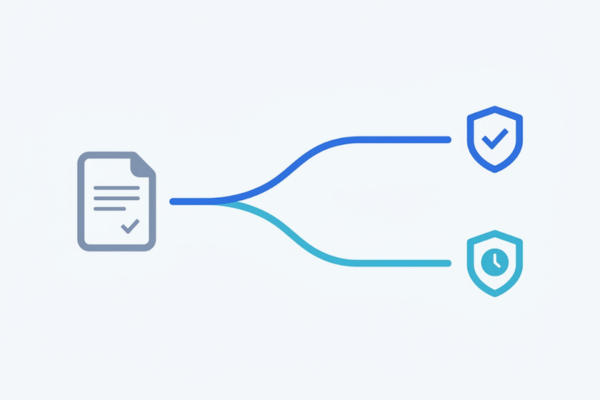
Importantly, if you handle cryptocurrency, New York requires a separate BitLicense (Virtual Currency Business Activity License) in addition to your money transmitter license. Many founders miss this nuance, leading to mid-application surprises. Additionally, New York does not follow the CSBS Money Transmission Modernization Act (MTMA) framework; instead, it maintains its own more stringent capital and compliance standards. This means you cannot rely on multi-state licensing templates; New York requires state-specific customization.
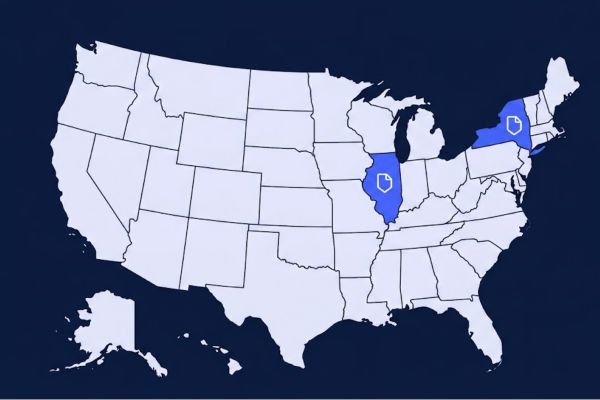
For founders scaling across multiple states, New York licensing exemplifies the fragmentation problem: each state has different capital thresholds, bond formulas, exemptions, and application processes. Managing this in spreadsheets and email becomes exponentially harder as you expand. Brico centralizes these 50-state requirements into a single system of record, automates data flows between jurisdictions, and ensures New York's strict compliance deadlines don't slip.
Who Needs a New York Money Transmitter License?
New York defines "money transmission" under Article 13-B of the Banking Law. You need a license if your business engages in selling or issuing checks or receiving money for transmission to another person.
Activities typically requiring a New York money transmitter license:
- Payment transmission: Receiving funds from New York customers and transmitting them to third parties (wires, ACH, SWIFT, card networks, etc.).
- Check issuance: Selling, issuing, or transmitting checks on behalf of customers or businesses.
- Money orders and traveler's checks: Issuing or transmitting these payment instruments.
- Stored value and prepaid cards: Issuing prepaid instruments, digital wallets, or stored value cards.
- Cross-border remittances: Moving funds internationally on behalf of New York residents.
- Neobank and embedded finance: If your app holds customer balances and transmits them per user request, you're transmitting money.
- Bill payment platforms: If customers fund accounts and you transmit to billers, you need a license.
- Marketplace and lending platforms: If funds flow through your infrastructure and you control movement, you likely need licensing.
- Certain stablecoin and cryptocurrency flows: If you facilitate fiat-to-crypto conversion, custody digital assets, or transmit crypto on behalf of New York customers, you need a SEPARATE BitLicense in addition to your money transmitter license.
Common exemptions (confirm with counsel):
- Banks and depository institutions licensed under other articles of New York law
- Limited purpose trust companies chartered under New York Banking Law (can transmit money without separate MTL)
- Software-only services that don't hold customer funds or control transmission (e.g., wallet infrastructure where customers self-custody)
- Investment-only users of virtual currency (BitLicense exemption)
Critical distinction for crypto founders: If you engage in virtual currency activities (trading, custody, exchange) with New York residents, you must obtain a BitLicense under 23 NYCRR 200. If you also transmit fiat currency, you need a Money Transmitter License too. The two licenses are separate, filed separately, and have different requirements.
Related: Who Needs a MTL (Money Transmitter License)? 8 Common Company Types
New York Money Transmission Law At a Glance
Regulator: New York State Department of Financial Services (NYDFS)
Primary Statute: Article 13-B of the New York Banking Law (sections 640-663); New York Department of Financial Services Regulations Part 406
Fiat Currency NMLS: Yes—NYDFS uses the Nationwide Multistate Licensing System for money transmitter applications.
Cryptocurrency/Virtual Currency: Separate regime—BitLicense (23 NYCRR 200, also filed through NMLS). If you transmit both fiat and crypto, you need both licenses.
Key Capital Requirement: Section 651 of the Banking Law mandates that money transmitters maintain liquid assets (permissible investments) equal to 100% of transmission liabilities. This is a strict, ongoing requirement—not a one-time threshold.
MTMA Alignment: New York has NOT adopted the CSBS Money Transmission Modernization Act. New York maintains its own framework, meaning net worth, bond, and compliance standards differ from MTMA states. Multi-state consistency cannot be assumed.
Living Compliance: New York regulations evolve regularly. Some 2026 priorities include stricter cybersecurity requirements and regulating Buy Now, Pay Later (BNPL) providers. Brico's embedded regulatory tracking ensures your team stays current without manual monitoring.
New York Money Transmitter Application Process (Step-by-Step)
Step 1: Confirm You Need a New York Money Transmitter License (and Whether You Also Need BitLicense)
Before committing resources, validate licensing requirements with surgical precision.
What this step involves:
- Map your fund flows: How do customers fund? Who receives funds? Does your company hold customer money, even temporarily?
- Identify New York customer touchpoints: Do your customers include New York residents?
- Assess your crypto exposure: Do you touch virtual currency in any capacity (trading, custody, exchange, transmission)?
- Review your partners and agents: Do you rely on licensed banks or intermediaries to handle transmission, or do you stand in the flow of funds?
Common misconception #1: "We're only handling cryptocurrency, so we just need a BitLicense." False. If your BitLicense activities include receiving fiat for transmission, you need both licenses.
Common misconception #2: "Our bank partner is licensed, so we don't need a license." Risky. If you control customer relationships or the timing/direction of fund movement, New York will likely require you to be licensed independently.
Common misconception #3: "We're incorporated in Delaware, so New York doesn't apply." False. New York licenses any entity providing money transmission services to New York residents, regardless of incorporation state.
Step 2: Design Your Business Plan and Compliance Framework
NYDFS scrutinizes business plans intensely. The regulator wants to understand your market, customer risk profile, operational controls, and capital adequacy before licensing you.
What NYDFS expects:
- Business model clarity: What exactly do you do? Who are your customers (demographics, geographies, risk profiles)? What transaction types and volumes do you handle?
- Flow of funds diagram: A visual showing how money moves from customer receipt → your systems → final recipient, including all intermediaries (banks, processors, agents).
- 3-year financial projections: Revenue, expenses, transaction volumes (dollars and units), customer acquisition strategy, working capital needs, capital injection timelines.
- Risk assessment: How do you identify and mitigate AML, fraud, cybersecurity, operational, and liquidity risks? What scenarios stress your capital?
- Compliance program overview: Summaries of your AML/BSA program, OFAC screening, KYC procedures, SAR processes, complaints handling, vendor management, and cybersecurity architecture.
- Operational detail: Staffing plan, technology infrastructure, customer communication protocols, dispute resolution procedures.
Why this matters: A generic or evasive business plan signals to NYDFS that you haven't operationalized compliance. A clear, specific plan demonstrates regulatory readiness and accelerates approval.
How Brico helps: Brico provides money-transmitter-specific business plan templates and New York compliance modules. Build your plan once in Brico; Brico auto-generates New York-specific sections, cross-references Section 651 liquidity requirements, and highlights regulator expectations. Version control and approval workflows ensure legal, ops, finance, and compliance teams align before submission.
Step 3: Gather Required Documentation
NYDFS requires a comprehensive application package. Submitting complete, accurate documentation on the first pass dramatically reduces back-and-forth delays—critical given typical 12-18 month timelines.
Required documentation for New York money transmitter license:
Typical gaps causing delays:
- Financial statements don't clearly show capital structure or omit supporting schedules.
- Business plan lacks specific customer risk assessment or volume assumptions seem unrealistic.
- AML policy is generic; doesn't reference your actual customer segments or transaction types.
- Section 651 calculation is incomplete or uses non-permissible investments.
- Missing fingerprint cards or incomplete background authorizations.
- Surety bond not signed or submitted in both physical and electronic form.
- Vendor documentation is thin (no SOC 2 reports, no security agreements).
How Brico helps: Brico maintains a comprehensive, state-specific document checklist for New York. As you upload each artifact, Brico tracks status (not started → in progress → approved → filed), flags missing items, and reminds you of document expiration dates. Cross-references link each document to the specific regulatory requirement. Automated alerts prevent last-minute scrambles.
Step 4: File Through NMLS
New York requires money transmitter applications through NMLS, using Company Form (MU1) and Individual Forms (MU2) for all control persons and officers.
The NMLS filing process:
- Create NMLS account (if you don't have one) through the NMLS Resource Center.
- Complete Company Form (MU1) with all organizational, operational, and financial details. Include your Chief Compliance Officer information, FinCEN registration number, bank information, and disclosure responses.
- Complete MU2 Individual Forms for all direct owners, all 10%+ indirect owners, and all executive officers.
- Authorize FBI background checks for each individual.
- Upload all supporting documents to NMLS (financial statements, business plan, AML policy, flow-of-funds diagram, etc.).
- Pay application fees: $3,000 application fee + $15 per control person credit report fee + agent fees (if applicable).
- Submit electronically through NMLS and receive confirmation number.
- Mail original surety bond to NYDFS (physical copy required in addition to electronic submission).
New York-specific details:
- All forms and documents must be submitted electronically via NMLS.
- Original surety bond must be mailed to New York State Department of Financial Services with your NMLS application ID reference number.
- NYDFS typically conducts an initial completeness review 2-4 weeks after submission. Incomplete applications are flagged; deficiencies must be cured within a stated timeframe.
- All communication with NYDFS occurs through NMLS; monitor your email for notices.
Why this matters: NMLS is unforgiving about format and completeness. A single inconsistency, missing digit, or incomplete section can trigger deficiency notices or delays. Accuracy and completeness on submission are critical.
How Brico helps: Brico maintains a data model that maps to every NMLS field. When you fill in Brico's forms (company name, addresses, ownership percentages, FinCEN number), Brico auto-populates corresponding NMLS fields, eliminating manual copy-paste errors. Brico's pre-submission checklist validates that all MU1 and MU2 fields are complete and consistent. A final audit ensures nothing slips through.
Step 5: Respond to Regulator Information Requests
After NYDFS receives your application, expect a period of detailed review. NYDFS typically sends clarifying questions 4-8 weeks after initial submission.
Common NYDFS questions and requests:
- Business model deep-dive: "Walk us through a typical transaction start to finish. Identify every control point, intermediary, and risk."
- Customer risk assessment: "How do you evaluate customer risk? What segments do you decline? How does this align with your AML procedures?"
- AML/SAR procedures: "Describe your transaction monitoring system. What triggers investigation? What is your SAR filing timeline?"
- Section 651 compliance: "How do you calculate transmission liabilities? How frequently do you rebalance permissible investments? What scenarios could cause you to fall out of compliance?"
- Capital adequacy: "If transaction volumes spike 50%, how does your capital model respond? How do you maintain liquidity?"
- Cybersecurity and vendor risk: "Describe your vendor selection process. What security standards do your core vendors meet? How is incident response managed?"
- Compliance infrastructure: "Who oversees AML day-to-day? What is your Compliance Officer's reporting structure? How is independence maintained?"
- Prior regulatory history: "You mention licensing in three other states. Provide copies of licenses and any examination findings."
Why this happens: NYDFS has discretion in licensing decisions. Regulators want to see that compliance isn't theoretical; it's operationalized. They also verify representations match reality.
Timeline: Expect 2-4 regulator inquiry rounds over your application cycle. Each inquiry typically allows 15-20 business days for response (extensions available upon request). Slow or evasive responses are interpreted as lack of readiness and can stall applications for weeks.
How Brico helps: Brico stores all regulator correspondence and responses in a centralized audit trail. When NYDFS sends an inquiry, your team searches Brico for related documentation and prior Q&A, ensuring consistent, comprehensive answers. Brico's task and collaboration tools route inquiries to responsible owners, flag response deadlines, and maintain a searchable archive so you don't re-answer questions you've already addressed.
Step 6: Satisfy Conditions and Obtain Conditional Approval
As your application nears approval, NYDFS typically issues a "conditional approval" letter outlining pre-licensure conditions you must satisfy.
Common New York conditions:
- Capital confirmation: Provide updated financial statements confirming you maintain adequate capital for your business plan.
- Execute surety bond: Obtain and file the required $500,000 (or $750,000) surety bond if not already done.
- Finalize banking: Provide executed agreements with your depository bank(s) confirming operating and settlement account arrangements.
- Compliance staffing: Confirm your designated Chief Compliance Officer is on board and dedicated (typically full-time for applicants).
- Final policies: Submit board-approved, final versions of AML/BSA, sanctions, fraud, complaints, and cybersecurity policies.
- Permissible investments confirmation: Demonstrate that you've secured the permissible investments (Treasuries, bank balances, securities) required to cover projected transmission liabilities.
- Pre-launch testing: Some applications require evidence of transaction testing or systems audits.
- Additional documentation: Respond to any final regulator clarifications or requests.
Why conditions exist: They confirm you've operationalized your compliance framework and can support the business you described. Conditions also allow regulators to deny licenses if conditions aren't satisfied.
Timeline: Conditions resolution typically adds 6-12 weeks, depending on complexity and your responsiveness. Surety bond underwriting can be the longest phase if your personal credit is weak or if the underwriter requires additional financial documentation.
How Brico helps: Brico's post-approval workflow module tracks each condition, assigns owners, sets deadlines, and flags status. When you upload a final policy or financial statement, Brico links it to the corresponding condition and marks it complete. A dashboard shows your team exactly which conditions remain open and which are satisfied.
Step 7: Onboarding Into Ongoing Supervision
Once you're licensed, New York licensing transforms from a project into an operating rhythm. Money transmitters must meet rigorous ongoing obligations.
Annual and periodic obligations:
- Annual license renewal: License expires December 31 each year. Renewal applications must be submitted by December 1 (confirm current deadline with NYDFS).
- Annual financial reporting: Submit audited or reviewed financial statements by March 31 of the following year, demonstrating continued compliance with Section 651 liquidity and capital requirements.
- Quarterly reporting (if BitLicensee): BitLicensees must file quarterly financial statements; money transmitter obligations may vary—confirm with NYDFS.
- MSB Call Report: File federal Money Services Business Call Report if you meet reporting thresholds.
- Surety bond renewal: Your bond must be continuously maintained; renew before expiration.
- Section 651 monitoring: Continuously maintain permissible investments equal to 100% of transmission liabilities. As your business scales, this requirement scales.
- Examination and audit: NYDFS may conduct periodic examinations (historically every 2-3 years, though timelines vary). Prepare for on-site visits, document requests, and detailed compliance reviews.
- Regulatory notifications: Notify NYDFS of material changes: new owners, management changes, business model changes, relocation, or any regulatory actions in other states.
- Agent list maintenance: If you use agents or delegates, maintain and update your agent list annually.
Recent enforcement trends (2024-2025): NYDFS has focused exams on inadequate AML oversight, delayed SAR filings, transaction monitoring weaknesses, and failure to remediate prior findings. Companies found non-compliant face consent orders, restitution, and penalties up to $4+ million.
Why ongoing compliance is critical: Failure to maintain liquidity, allow bond to lapse, or respond to exam requests can result in license suspension or revocation. Operating without a license carries civil penalties and potential criminal liability.
How Brico helps: Brico transforms licensing into an operating system. Brico maintains a calendar of all New York renewal deadlines, exam dates, reporting obligations, and surety bond renewal dates. Automated reminders alert your team 90, 60, 30, and 7 days before each deadline. Document templates pre-populate with prior-year data, reducing preparation time. For multi-state operators, Brico provides a unified dashboard showing licensing status, pending renewals, and upcoming obligations across all states.
New York Net Worth, Bond, and Fees
Capital and Liquidity Requirements
New York does not specify an explicit minimum net worth, but Section 651 of the Banking Law imposes a strict liquidity requirement: you must maintain permissible investments (cash, bank deposits, Treasuries, investment-grade securities) equal to 100% of your money transmission liabilities.
Example scenario:
- Your application projects $5 million in average daily money transmission liabilities (funds held on behalf of customers).
- You must maintain $5 million in permissible investments to cover those liabilities.
- If your business grows to $10 million in liabilities, your permissible investment requirement grows to $10 million.
- This is not a one-time threshold; it's a continuous requirement monitored quarterly and annually.
NYDFS evaluates whether your business plan and financial projections demonstrate adequate capital to maintain this liquidity while covering operational expenses. A startup with $500,000 in capital projecting $1 million in initial liabilities will face scrutiny: Where's the margin for operational losses or chargebacks?
Related: MTL Financial Requirements and Net Worth Readiness
Surety Bond Requirements
New York mandates a surety bond to protect consumers and the state.
- Standard bond: $500,000 for money transmitters handling payment instruments.
- Traveler's checks: $750,000 if you issue or transmit traveler's checks.
- Determination: Bond amount is determined by NYDFS based on your business plan and risk profile, but $500,000 is the baseline.
Bond cost by credit score (for $500,000 bond):
- 800+ credit: $7,500/year
- 650–799 credit: $10,000/year
- 600–649 credit: $20,000/year
- 550–599 credit: $37,500/year
- Weaker credit: $50,000+ per year (some surety companies may decline)
For a $750,000 bond (traveler's checks):
- 800+ credit: $11,250/year
- 650–799 credit: $15,000/year
- 600–649 credit: $30,000/year
- 550–599 credit: $56,250/year
Bond underwriters assess your personal credit, work experience, and company financials. Delays in bond procurement—especially if your credit is weak—can delay final approval by 4-8 weeks.
Application and Licensing Fees
- Application fee: $3,000 (New York-specific)
- Credit report fee: $15 per control person
- Criminal background check: $36.25 per control person
- Agent fee: $0.25 per authorized agent (first 100 agents exempt)
- Annual renewal fee: Determined by NYDFS; typically a few hundred to a few thousand dollars
Total initial cost estimate (excluding legal/compliance advisory):
- Surety bond (800+ credit, $500K): $7,500/year
- NMLS and New York application fees: $3,000-5,000 (depending on control persons/agents)
- Business formation, registered agent: $300-600
- Subtotal (regulatory only): ~$10,800-13,100
Total cost with professional support (typical fintech):
- Outside regulatory counsel: $5,000-15,000
- Compliance program drafting (AML, policies, procedures): $3,000-8,000
- Business plan and financial modeling: $2,000-5,000
- Internal team time (3-6 months FTE for ops, compliance, finance): $50,000-200,000 depending on team size
- Subtotal (soft costs): $67,200-238,800
- Total (regulatory + soft): $78,000-252,000
Costs vary widely based on company stage, complexity (crypto adds 30-50% to timeline and cost), team sophistication, and prior regulatory experience.
How Brico helps: Brico maintains current New York bond, fee, and capital requirements. Brico's scenario planning tools let you model: "If transmission liabilities grow to $10M, what is my Section 651 requirement? What surety bond cost does that trigger?" This foresight prevents mid-year surprises and enables proactive capital planning.
Related: How Much do MTLs Cost?
Common New York MTL Pitfalls for Fintech Founders
Learning from others' missteps accelerates approval and prevents costly application restarts.
1. Underestimating Section 651 liquidity requirements or using non-permissible investments
Pitfall: You project $2 million in average daily transmission liabilities and show $2 million in "permissible investments." But upon review, regulators discover that $800,000 of that is in illiquid startup equity or restricted stock. Section 651 requires truly liquid, permissible investments: cash, bank deposits, Treasuries, investment-grade corporate bonds, or government obligations. Regulators reject the application or require capital injection.
How to avoid: Understand what "permissible investments" means under Section 651. Work with your CFO and counsel to confirm every dollar claimed as permissible investment meets the definition. Be conservative; if an investment is borderline, exclude it.
How Brico helps: Brico's Section 651 calculator auto-validates that your claimed investments meet permissible definitions and flags non-compliant items before submission.
2. Submitting an AML policy that doesn't match your actual customer or transaction risk profile
Pitfall: You copy a generic AML template, submit it as-is, and regulators reject it because it doesn't reference your specific customer segments, geographies, or transaction types. Example: your policy states "no high-risk countries," but you're targeting remittances to Mexico and the Philippines. Inconsistency raises red flags.
How to avoid: Tailor every policy section to your business. If you're targeting immigrant remittances, your AML policy should reference that customer segment, describe your geolocation screening, specify which corridors get enhanced due diligence, and explain your SAR thresholds for that segment. If you're an enterprise B2B payment platform, your policy should reflect lower-risk corporate customers.
3. Weak or incomplete Compliance Officer documentation
Pitfall: You list a Compliance Officer but don't provide evidence of their experience, qualifications, or independence. Regulators want to know: Is this person full-time or part-time? Do they report to the CEO or independently to the board? Have they held compliance roles in regulated companies? A weak CCO profile can stall or trigger conditions.
How to avoid: Your designated Compliance Officer should be full-time, experienced (ideally 5+ years in financial services compliance), and able to report independently (preferably to the CEO or board compliance committee). Prepare a CV and attestation of independence/authority. If you can't hire a dedicated CCO before application, NYDFS will likely issue this as a condition of approval.
Related: MTL Compliance Officer Requirement
4. Inconsistent business model descriptions across documents
Pitfall: Your NMLS application describes you as a "money transmitter offering bill payment and wallet services," but your business plan focuses on cross-border remittances, and your website emphasizes crypto payments. Inconsistencies raise concerns that you don't understand your own business or are hiding something.
How to avoid: Create a single, consistent business description and use it verbatim across NMLS, your website, bank documentation, investor materials, and conversations with regulators. Run a document audit before submission.
How Brico helps: Brico maintains a central "business profile" block that auto-populates across all documents and filings. Edit once; it updates everywhere, ensuring consistency.
Related: MTL Business Plan Requirements
5. Inadequate vendor documentation or oversight
Pitfall: You list a KYC vendor, payment processor, and cloud provider but don't provide contracts, SOC 2 reports, or security questionnaires. Regulators increasingly scrutinize third-party risk and want proof you've vetted vendors and defined escalation procedures. Weak vendor documentation can trigger exam findings or conditions.
How to avoid: For each material vendor (core payments, KYC, cloud, communications), maintain executed agreements, SOC 2 Type II audit reports, security questionnaires, and incident notification procedures. Document your vendor selection criteria and ongoing monitoring process.
6. Slow or evasive responses to regulator inquiries
Pitfall: NYDFS sends a follow-up question. You take 30 days to respond, or you provide vague answers that don't directly address what the regulator asked. Regulators interpret slow responses as lack of operational readiness and issue additional follow-ups, extending timelines by months.
How to avoid: Establish an internal SLA: regulator question received → compliance officer routes to responsible owner → response drafted within 5 business days → legal/CFO review → submitted to regulator within 10 business days. Speed and clarity matter in New York.
How Brico helps: Brico's task and collaboration module routes regulator questions to responsible owners, flags response deadlines, and maintains a searchable archive of all prior Q&A so you can ensure consistency and avoid re-answering questions.
Timeline: How Long Does New York Licensing Take?
Realistic New York timeline: 12–24 months from initial preparation to full approval and licensure.
This breaks down as:
Factors that compress timeline:
- Complete, accurate NMLS application with no deficiencies.
- Responsive team (responses within 5-10 business days).
- Clear, specific business plan tied to actual operations.
- Clean compliance program with no gaps.
- Simple ownership structure (fewer individuals = faster background checks).
- Prior fintech or regulated industry experience (regulators view you as lower-risk).
- Strong personal credit (faster surety bond underwriting).
Factors that extend timeline:
- Complex ownership structure (holding companies, foreign entities, multiple tiers).
- Weak personal credit or financial history (bond underwriting delays).
- Crypto focus (regulators conduct deeper, slower scrutiny).
- Prior regulatory actions or licensing denials in other states.
- High-risk customer segments or geographies (enhanced due diligence).
- Slow internal decision-making (unclear who owns each task).
- Surety bond procurement delays.
- Incomplete or evasive responses to regulator inquiries.
New York regulatory context: NYDFS is known for thorough, deliberate review. The regulator rarely fast-tracks applications; 12-18 months is standard for well-prepared applicants, with 18-24+ months common for crypto or complex models. Recent audit findings (2025) show that NYDFS exams have multi-year gaps, suggesting regulatory capacity constraints.
New York Regulator Contacts and Official Resources
The New York Department of Financial Services oversees money transmitter licensing. For official information and resources:
- Official NYDFS money transmitter page: https://www.dfs.ny.gov/apps_and_licensing/money_transmitters
- Official NYDFS virtual currency (BitLicense) page: https://www.dfs.ny.gov/virtual_currency_businesses
- New York Banking Law Article 13-B (sections 640-663): https://law.justia.com/codes/new-york/banking-law/article-13-b/
- NYDFS Regulations Part 406 (Money Transmission): https://www.dfs.ny.gov/
- NYDFS BitLicense FAQs: https://www.dfs.ny.gov/virtual_currency_businesses
- NMLS resource center for New York: https://mortgage.nationwidelicensingsystem.org
- NYDFS contact: (212) 709-8000 or https://www.dfs.ny.gov/about/contact-us
Note on dynamic updates: New York regulations evolve regularly. Recent updates (2025) include custodial guidance for virtual currency, stricter AML oversight requirements, and proposed changes to consumer protection rules. Always reference NYDFS's official website or consult regulatory counsel for current requirements. Outdated PDFs and bookmarks are a common source of compliance errors.
How Brico adds value: Brico embeds official NYDFS links and requirements into its workflows, maintaining a "living" reference library that auto-updates when NYDFS publishes changes. Your team always works with current, official requirements—no manual bookmark management.
How Brico Helps With New York Money Transmitter Licensing
The core problem: New York money transmitter licensing is complex, multi-layered (fiat MTL + potential BitLicense), and subject to one of the nation's most rigorous regulators. Founders managing licensing via spreadsheets, email threads, and PDFs face exponential friction:
- Two separate licensing regimes (Money Transmitter + potentially BitLicense) with different requirements and deadlines.
- Complex capital and liquidity calculations (Section 651) that evolve as your business scales.
- Regulator communications scattered across email; hard to track what was asked, answered, and remains pending.
- Compliance deadlines (renewal, reporting, surety bond renewal) are missed because they're spread across multiple calendars.
- Multi-state ambitions require managing 50+ different net worth thresholds, bond formulas, exemptions, and processes.
- New York's deliberate review timeline (12-24 months) makes every delayed response costly.
As you scale from New York to multiple states, this fragmentation becomes a bottleneck.
For New York specifically, Brico ensures you don't miss NYDFS's strict Section 651 liquidity calculations, respond promptly to regulator inquiries (critical given New York's deliberate review timeline), maintain ongoing compliance rhythms (annual renewals, bond tracking, net worth monitoring), and scale intelligently to other states without losing focus.
Ready to streamline New York licensing and scale to 50 states?
Get expert help navigating New York money transmitter licensing. Brico's compliance specialists and platform are built for fintech founders operating in the nation's most demanding regulatory environment. We'll guide you through New York requirements, manage your multi-state roadmap, and ensure regulatory compliance doesn't slow your growth.
Book a New York MTL strategy session with Brico. Let's clarify your licensing footprint and identify the fastest path to market.