A Money Transmitter License (MTL) authorizes activities like cross border payments, remittances, crypto on and off ramp, and payment facilitation. The challenge? Each of the 50+ states issues its own money transmitter license with unique requirements.
Non-US founders and international payments companies often stand at the edge of US expansion, knowing the market's potential but unsure about regulatory readiness. Cross-border fintechs face extra hurdles like entity setup from afar and verifying foreign financials – this guide bridges those gaps with a clear checklist tailored for your jump into American money transmission.
Based on daily conversations with international founders at Brico, this guide covers what you need to have in place before submitting applications.
6 MTL Prerequisites Foreign Fintechs Must Meet Before US Apps
US regulators want to see local operations and financial stability. Here's what foreign entities frequently miss:
1. A US-based compliance expert Hire a fractional compliance specialist based in the US in order to present the right leadership team to regulators. This person must have at least 5 years direct U.S. AML experience. While founders often understand AML, direct experience means being the person in charge of/advising on AML, so product leaders who have implemented these controls often cannot satisfy this requirement. As your licenses register, this role should become full-time. Offshore compliance leads are not the right profile here.
Related: Money Transmitter License: Compliance Officer Requirement
2. A US bank account You'll need this for money transmission during US expansion. Since global banks often hesitate to work with unlicensed entities, prioritize fintech-friendly US banking options early in the process to prove operational readiness when entering the US market.
Related: How to Find an MSB Friendly Bank
3. A domestic legal entity Set up a US entity to hold your MTLs as part of your US expansion: offshore parents can't apply directly. It is advisable to consult legal counsel on the right type of entity, whether an LLC, C corp or otherwise. This entity must be operating, i.e. have funds flowing through it, regulators are wary of "shell" companies with no purpose other than holding the licenses.
4. A physical US address Secure a private coworking office or similar space for your US entity. PO boxes and virtual office setups often lead to application rejections. Also, be aware that this cannot be a residential address: the tangible office presence reassures states you're committed to the market beyond offshore operations.
Related: MTL Physical Office Requirements
5. Sufficient net worth Planning to operate nationwide? You’ll want to have ~ $1M in net worth, i.e. assets minus liabilities on the balance sheet. If you are only applying to a few states, $500K in net worth should suffice. This money must be located in the bank account of the US entity.
Related: Financial Requirements and Net Worth Readiness
6. Audited financial statements Most states require audited financials, even if you have a newly created U.S. entity, and many want audited financials for your parent entity as well. If your books follow international standards, you'll need to align them with US GAAP accounting requirements.
Related: MTL Financial Projections Requirements
Missing any of these can stall your application. Brico connects customers with partners for entity formation and fractional compliance help as part of your expansion plan.
Why Offshore Founders Need US-Specific Setup
Foreign fintechs often underestimate how US regulators scrutinize local presence. Your offshore parent can't hold licenses directly – the US entity must demonstrate real operations through active banking and a dedicated office space to avoid "shell company" flags.
Financial Proof Regulators Demand from International Entities
States verify capital through balance sheet snapshots and audits, often requiring parent-level financials converted to US-GAAP. Nationwide applicants trigger stricter surety bond underwriting, and regulators often demand $1M+ liquidity proof upfront.
Timeline Estimates for International MTL Applicants
Timing, Inclusive of Pre-File Prep
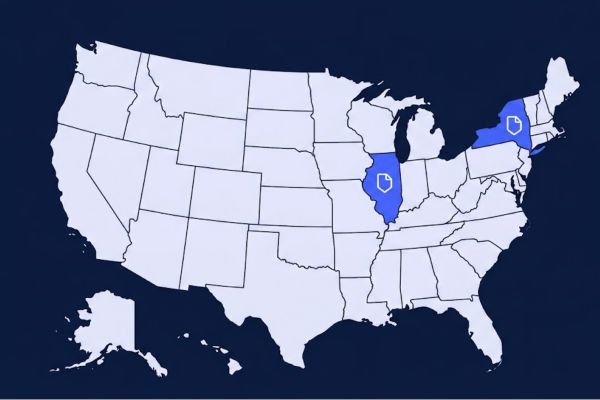
The preparation phase typically runs 1–3 months for internationals due to overseas coordination. After that, you’ll need to fill out your applications. Brico’s team can help you prepare nationwide MTL apps in 2-3 weeks; law firms or consulting firms typically take a few months. Once applications are submitted, processing times vary dramatically by state: Georgia may take around 2 months, while New York or California can take 1 to 2 years.
Once approved, quarterly and annual reporting plus annual renewals become mandatory. Miss one, and you risk suspension. For more details, see our MTL Timelines Breakdown.
Related: MTL Timeline Guide: Fast-Track Your Money Transmitter Licenses
Budget Breakdown for Foreign Fintech US Licensing
Hidden Costs Unique to Non-US Companies
Per-state fees range from $1K to over $10K for applications, examinations, and renewals, unchanged for foreigners but compounded by translation/legal alignment costs. See our State Fees Details for specifics.
Brico's pricing runs 90% below traditional law firms and about one-half of services firms, thanks to automation that reduces manual work. This is particularly beneficial for international companies avoiding hourly foreign-doc reviews.
Surety bond premiums. Think of these as an insurance policy in a liquidity crunch. Each state has a different requirement, but nationwide MTL applicants should budget $120K - $160K.
Fractional CCO. If you do not have this person on your team, you’ll likely pay a fractional CCO somewhere between $7.5K to $12K per month. S/he can help you adapt your AML and KYC policies to the U.S. market, and run point on licensing if you so choose.
Total investment for licensing across 5–50 states typically falls between $100K and $1M+
The alternative is far more expensive. Operating without proper licensing can result in fines, profit clawbacks, criminal charges for executives, and blocked partnerships.
Related: How much do MTLs cost?
Risks Foreign Payments Firms Face Entering Without Prep
Without an MTL, you're exposed to cease-and-desist orders, enforcement actions, fundraising obstacles, and banking relationship problems. Most states don't allow operations while applications are pending, though rules vary. Foreign fintechs face additional scrutiny around entity legitimacy and funds flows.
Next Steps for Foreign Fintechs
Brico's Support for Non-US Fintech US Expansion
Brico combines an MTL licensing platform with human expertise to support international expansion. We help you file faster, reduce compliance costs, and manage ongoing maintenance and reporting. Unlike siloed firms, we build long-term relationships and connect you with trusted legal and CCO partners.
Ready to assess your readiness and build a strategy? Book a demo and let's get you launched in the US.