
What Is a Money Services Business?
A Money Services Business (MSB) is a federal regulatory classification defined by FinCEN (Financial Crimes Enforcement Network, U.S. Treasury) under 31 CFR §1010.100(ff). MSBs are non-bank companies providing specific financial services that trigger Bank Secrecy Act (BSA) oversight.
Core purpose: Ensure non-banks implement AML programs, file suspicious activity reports (SARs), and maintain transaction records to combat money laundering and terrorist financing.
Key distinction: MSB registration ≠ license. It notifies FinCEN you exist and comply with federal AML rules. It does not authorize money transmission: that requires state MTLs. See MSB vs money transmitter license differences.
Foreign entities: Companies "doing business wholly or substantially within the U.S." (U.S. customers) qualify as MSBs.
The 6 MSB Categories (Which Applies to You?)
FinCEN defines 6 specific MSB activities. Most have a $1,000/person/day threshold—money transmitters are the exception (no minimum).
| Category | Definition | Threshold | Examples |
|---|---|---|---|
| Money Transmitter | Receive/transmit funds for others | None | P2P apps, remittances, crypto exchanges |
| Currency Dealer/Exchanger | Accept currency → deliver currency/other value | >$1K/person/day | FX kiosks, crypto↔fiat ramps |
| Check Casher | Accept checks → pay cash/other value | >$1K/person/day | Check cashing stores |
| Net Worth | None | >$1K/person/day | 49 states + D.C. |
| Issuer of Traveler's Checks, Money Orders, Stored Value | Issue these instruments | >$1K/person/day | Money order providers |
| Seller/Redeemer of Above | Sell/redeem these instruments | >$1K/person/day | Retail money order agents |
| Prepaid Access | Provider: Issue stored value Seller: Sell >5 cards | Provider: >$10K aggregate Seller: >$10K/person/year OR >5 cards | Gift card programs, digital wallets |
Crypto note: FinCEN 2013 guidance treats virtual currency exchangers/administrators as money transmitters (MSBs).
Related: Who needs a money transmitter license?
How States Define Money Services Businesses
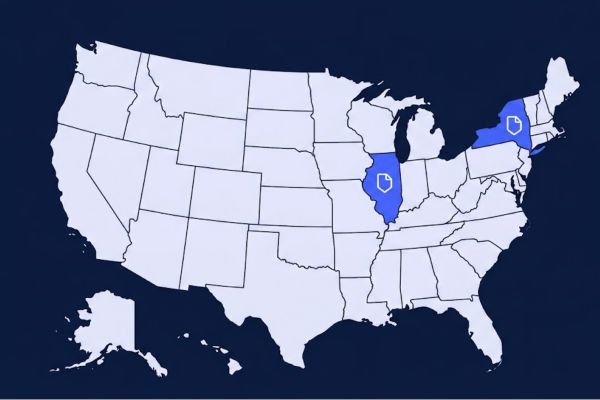
While MSB is federal, 49+ states + D.C./Puerto Rico regulate MSBs via NMLS (separate from MTLs).
| Jurisdiction Type | MSB License? | Platform |
|---|---|---|
| NMLS States (49) | Yes | NMLS |
| MTMA States (41+) | Harmonized MSB/MTL | NMLS |
| Montana | Secretary of State | State portal |
Why Does FinCEN Require MSB Registration?
MSB registration creates a federal registry for AML oversight. Without it:
- You're "unregistered" → civil penalties ($500+/day; $5K max/day).
- No SAR/CTR filing access → compliance gap.
- Invisible during FinCEN/IRS exams.
Registration brings you into the regulated ecosystem with ~25,000 active MSBs nationwide.
What Happens if I Operate without MSB Registration?
Running an unregistered company is illegal.
Operating as an unregistered MSB triggers serious federal penalties under 31 U.S.C. § 5325 and 31 CFR 1010.520. FinCEN treats non-registration as willful non-compliance, with consequences escalating from civil fines to criminal prosecution.
Civil Penalties (Most Common)
- $564/day minimum (2025 inflation-adjusted from $500 base).
- Up to $28,222/day maximum per violation.
- No upper limit on total fines—calculated by days unregistered × volume.
Example: 90 days unregistered at minimum penalty = $50,760
Criminal Penalties (Severe Cases)
- Felony: Up to 5 years prison + $250K fine per executive (18 U.S.C. § 1960).
- Applies when FinCEN proves "knowing" non-registration.
- Personal liability: Founders/officers named individually.
Precedent: 2023 FinCEN actions against crypto mixers resulted in $100M+ penalties + prison time for unregistered MSBs.
Learn more about FinCEN’s enforcement actions for failure to register as a MSB.
Operational Fallout
- Cease-and-desist orders: Immediate shutdown of U.S. operations.
- Asset freezes: Banking relationships terminated; customer funds held.
- Public enforcement: FinCEN publishes violations → reputational damage.
- License denials: State MTL applications rejected due to federal non-compliance.
Secondary Business Impacts
| Consideration | Impact |
|---|---|
| Investor Due Diligence | Red flags kill funding rounds |
| Banking Access | Banks avoid "unregistered MSB" risk |
| Partnerships | Enterprises require MSB # upfront |
| State Licensing | MTL apps ask "federal registration status?" |
Timeline: 3-12 months to resolve; operations paused.
MSB Registration Process: Step-by-Step
Timeline: Immediate confirmation + 2-6 weeks processing. File within 180 days of MSB activity.
- Confirm eligibility: Match your model to 6 categories above.
- Gather info: Business name/DBA, EIN, address, AML officer contact, business locations.
- E-file Form 107: BSA E-Filing System (free, ~30 minutes).
- Receive confirmation: FinCEN emails registration number.
- Implement AML: Written program (policies, training, audit, officer).
- Renew: Every 2 years (Form 107R).
Cost: $0 federal. State MSB fees: $0-5K (if applicable).
MSB Compliance Requirements (The AML Program)
Once registered, MSBs must maintain a written AML program with 4 pillars:
- Policies: Procedures to identify/detect suspicious activity.
- Training: Annual employee AML training.
- Independent audit: Annual review by qualified party.
- AML Officer: Designated compliance lead.
Ongoing obligations:
- SARs (suspicious ≥$2K)
- CTRs (cash ≥$10K)
- Recordkeeping (transactions ≥$3K)
- Customer ID Program (CIP)
- FinCEN exams (IRS delegated, limited frequency)
Related: MSB Renewal vs Re-Registration: Key Differences Explained
Crypto Businesses and MSB Registration
FinCEN treats virtual currency as "monetary value":
- Exchanges (fiat↔crypto): MSB money transmitters.
- Custodial wallets: MSB if you control private keys/flow.
- DeFi/non-custodial: Generally exempt (user controls keys).
2013 FinCEN Guidance: Coinbase registered as MSB post-guidance. Most VC platforms need MSB + state MTLs
Related: The Real Cost of a New York BitLicense
MSB vs Money Transmitter Licenses (MTL)
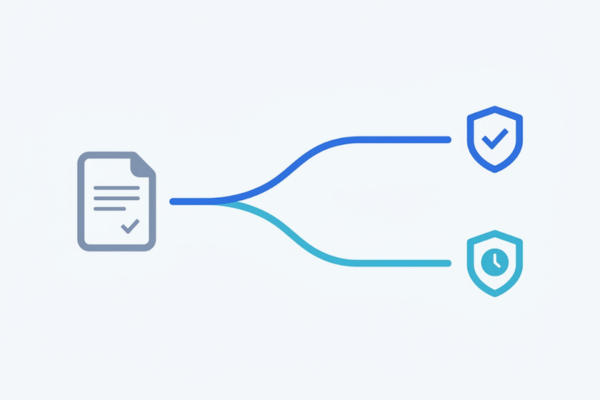
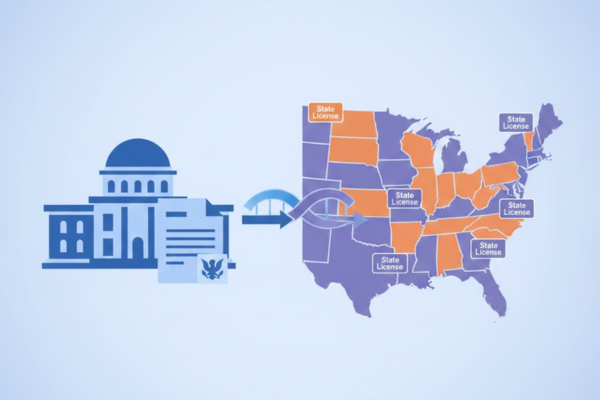
MSB registration with FinCEN confirms that your company is visible to federal regulators and operating under a written AML program, but it does not replace state-level authorizations. Most firms that actively transmit funds for others end up needing both the federal registration and one or more state permissions, with each layer focused on different goals: federal oversight for financial crime risk, and state oversight for consumer protection and local compliance obligations.
Transmitters need both. See the full MSB vs MTL licensing differences.
Common MSB Mistakes Founders Make
- Thinking that "MSB = MTL license": Federal registration doesn't authorize transmission.
- Missing 180-day deadline: $500+/day penalties.
- Weak AML program: FinCEN enforcement actions.
- Ignoring state MSB licenses: Required in 47+ states.
- Crypto exemption wishful thinking: FinCEN guidance is clear.
What Happens After You're Registered?
- Biennial renewals (Form 107R)
- Annual AML audits
- SAR/CTR filing access
- FinCEN searchable registry listing
Why Choose Brico for MSB Compliance?
Brico’s money transmitter licensing software tracks federal MSB renewals + state MSB/MTL licenses in one dashboard. Automated Form 107 renewals, AML templates, deadline alerts.
Book a demo for your MSB roadmap.
Disclaimer: This article is for informational purposes only and does not constitute legal, financial, or regulatory advice. Brico is not a law firm and does not provide legal counsel. Licensing requirements vary by state and depend on your specific business model and circumstances. You should consult with qualified legal counsel before making any licensing decisions or taking action based on this content.