

Jan 12, 2026

Secretary of State Registration: What Fintech Founders Need to Know

If you're building a fintech company, you'll file dozens—maybe hundreds—of regulatory documents before you're fully operational. But every single one of them depends on something deceptively simple: your Secretary of State registration.

Last updated: 
January 13, 2026
Share this post
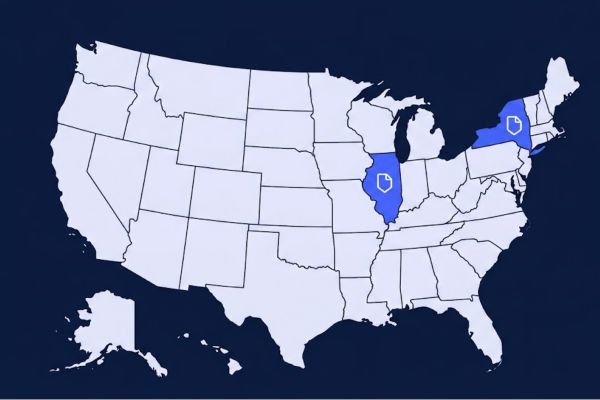
Secretary of State registration flowchart showing entity formation, multi-state foreign qualification, and MTL licensing prerequisites for fintech founders

Secretary of State (SOS) registration creates your business as a legal entity. It's the foundation that makes everything else possible: opening bank accounts, raising capital, hiring employees, and most critically for fintech companies, applying for money transmitter licenses and other financial services permits.

Most founders treat SOS registration as a checkbox item and move on. That's a mistake. For fintech companies operating across multiple states, your corporate compliance strategy directly impacts your licensing timeline, your ability to maintain licenses once you have them, and your exposure to regulatory risk.

This guide covers what fintech founders specifically need to know about Secretary of State registration, including how it connects to your licensing roadmap and what happens when corporate compliance gaps derail your regulatory strategy.

Why SOS Registration Matters More for Fintech

For a typical small business, Secretary of State registration is straightforward: form your entity, file annual reports, and maintain good standing. The stakes are relatively low.

For fintech companies, the stakes are dramatically higher.

Licensing prerequisites. State financial regulators require proof of corporate registration and good standing before they'll process license applications. No SOS registration means no money transmitter license. A lapse in good standing can delay or derail pending applications.

Multi-state complexity. Unlike a local business operating in one state, fintech companies typically need to be registered in dozens of states—everywhere they have customers. That means managing 40+ separate SOS registrations, each with different annual report deadlines, fees, and requirements.

Regulatory scrutiny. State examiners review your corporate compliance during licensing examinations. If they discover you're not registered or not in good standing in states where you're operating, you face enforcement action—even if your MTL is current.

Banking relationships. Banks conduct due diligence on fintech partners. Corporate compliance issues—missing registrations, lapsed good standing—can torpedo banking relationships that took months to establish.

Investor confidence. Sophisticated investors verify corporate compliance during due diligence. Gaps in your SOS registrations signal operational immaturity and increase perceived risk.

Related: What Is a Money Transmitter License?

The Basics: What SOS Registration Actually Does

Secretary of State registration is the process of formally creating a business entity by filing formation documents with a state government. According to the U.S. Small Business Administration, if your business is an LLC, corporation, partnership, or nonprofit, you'll need to register with the Secretary of State's office in any state where you conduct business activities.

When you file articles of organization (for an LLC) or articles of incorporation (for a corporation), you're establishing a legal entity that exists separately from its founders. This provides several essential benefits.

Legal existence. Your company can enter contracts, own property, open bank accounts, and conduct business in its own name.

Liability protection. For LLCs and corporations, registration activates the liability shield that separates your personal assets from business obligations. Without proper registration and ongoing compliance, founders risk piercing the corporate veil.

Name protection. Your registered business name is reserved for your exclusive use within that state.

Public record. Registration creates a public record that regulators, banks, partners, and investors can verify.

For fintech companies, that last point matters most. When a state regulator reviews your MTL application, they're checking the public record to confirm your company exists and is authorized to do business. When a bank evaluates you as a partner, they're pulling your corporate records. When investors conduct due diligence, they're verifying your registrations.

Related: Certificate of Good Standing: What It Is and How to Get One

Choosing Your Formation State

Most fintech companies form in Delaware, Wyoming, or their home state. The choice matters for tax treatment, legal flexibility, and investor expectations—but it doesn't reduce your multi-state registration burden.

Delaware

Delaware remains the default choice for venture-backed startups. Its business-friendly legal framework, specialized Court of Chancery, and well-developed case law make it attractive for companies planning to raise institutional capital. Investors and their lawyers are familiar with Delaware corporate law, which reduces friction during fundraising.

However, forming in Delaware doesn't mean you can operate everywhere. If your fintech has customers in California, you still need to register in California. Delaware formation plus California foreign qualification means two sets of filings, two sets of fees, and two sets of compliance obligations.

Wyoming

Wyoming has emerged as an alternative for fintech companies, particularly those in crypto and blockchain. The state has enacted favorable legislation for digital assets and charges lower fees than Delaware. However, Wyoming's legal framework is less tested, which may concern some institutional investors.

Home State

If you're not raising venture capital and operate primarily in one state, forming in your home state simplifies compliance. You avoid the need to register in two states (formation state plus operating state) and deal with only one set of requirements.

The Bottom Line

Regardless of where you form, you'll need to register as a foreign entity in every state where you have customers, employees, or significant operations. For fintech companies pursuing nationwide money transmitter licenses, that typically means 48+ state registrations.

Related: Secretary of State Registration Guide

Multi-State Registration: The Fintech Reality

Here's where fintech companies diverge from typical businesses. A restaurant operates in one location. A fintech with a mobile payment app operates everywhere its customers are—which often means all 50 states from day one.

When Foreign Qualification Is Required

According to the U.S. Small Business Administration, you're generally considered to be conducting business in a state when your business has a physical presence there, you frequently meet with clients in person, or a significant portion of your revenue comes from that state.

For fintech companies, the analysis is more nuanced. Having customers in a state may trigger registration requirements even without physical presence. State regulators increasingly take the position that serving customers in their state—even remotely—constitutes doing business there.

The practical approach: if you're applying for a money transmitter license in a state, you should be registered with that state's Secretary of State. Regulators expect it, and your MTL application will require a certificate of good standing anyway.

The Registration Sequence

For fintech companies, the typical sequence is:

  1. Form in your chosen state (Delaware, Wyoming, or home state)
  2. Register as a foreign entity in each state where you'll apply for MTLs
  3. Obtain certificates of good standing as part of your MTL applications
  4. Maintain ongoing compliance in all registered states

This creates a direct dependency: your licensing timeline depends on your corporate registration timeline. If you haven't registered in a state, you can't apply for an MTL there. If you register but fall out of good standing, your MTL application stalls.

Related: How Long Does It Take to Get a Money Transmitter License?

What You Need to Register

Whether you're filing a domestic formation or foreign qualification, you'll need to prepare several elements.

Registered Agent

Every state requires a registered agent—a person or company authorized to receive legal documents and official correspondence on your behalf. The registered agent must have a physical street address (not a P.O. box) in the state where you're registering.

For fintech companies operating in dozens of states, hiring a commercial registered agent service is the practical choice. These services maintain addresses in all 50 states and forward documents to you electronically. Costs typically range from $100-$300 per state per year.

Your registered agent is also your first line of defense if you're served with legal process. Missing a service of process because your registered agent lapsed can result in default judgments against your company.

Formation Documents

For LLCs: Articles of Organization (called Certificate of Formation in some states). Required information includes your business name, registered agent, principal office address, and management structure (member-managed or manager-managed).

For Corporations: Articles of Incorporation (called Certificate of Incorporation in Delaware). Required information includes your business name, registered agent, authorized shares, and incorporator information.

For foreign qualification, you'll also need a certificate of good standing from your formation state proving your company exists and is compliant there.

Filing Fees

Initial formation fees vary by state, typically ranging from $50-$500. Foreign qualification fees are similar. For a fintech company registering in all 50 states, budget approximately $10,000-$20,000 in initial SOS filing fees alone—before you even start your MTL applications.

Example Current Filing Fees
State LLC Formation Foreign LLC Corporation Formation Foreign Corp
California $70 $70 $100 $100
Delaware $90 $200 $89+ $245+
Florida $125 $125 $70 $70
New York $200 $250 $125 $225
Texas $300 $750 $300 $750

*Check each SOS website or an updated fee chart for the most current figures.

Related: How Much Does a Money Transmitter License Cost?

Ongoing Compliance: Annual Reports and Good Standing

Registration isn't a one-time event. Every state requires ongoing filings to maintain your registration—and your good standing.

Annual Reports

Most states require annual reports (some require biennial reports) that confirm or update your business information. These reports are essential for maintaining good standing, and compliance officers must ensure timely and complete filing to avoid penalties.

Annual reports typically ask you to verify your business name and address, registered agent information, names and addresses of officers or managers, and principal office address.

The challenge for fintech companies: managing 40+ different annual report deadlines across different states. Some states use calendar-year deadlines (due by a specific date each year). Others use anniversary deadlines (due on the anniversary of your registration). Missing even one deadline puts you out of good standing in that state.

Good Standing

A company is in "good standing" when it has filed all required reports and paid all fees. You can obtain a certificate of good standing as proof—and you'll need these certificates frequently.

MTL applications require certificates of good standing from your formation state and often from every state where you're registered.

MTL renewals may require updated certificates proving you're still compliant.

Banking partners request certificates during onboarding and periodic reviews.

Investors verify good standing during due diligence.

According to Harbor Compliance, the Secretary of State will not issue a certificate of good standing unless your entity is current with all required business reports and taxes.

Related: Certificate of Good Standing: What It Is and How to Get One

Consequences of Non-Compliance

For fintech companies, the consequences of corporate non-compliance extend far beyond late fees.

Operating a business without required state licenses, including those managed by the Secretary of State (SOS) or other agencies, is illegal.

Licensing delays. If you're not in good standing, your MTL application stops. State regulators won't process applications from companies that aren't properly registered and compliant.

Licensing jeopardy. If you fall out of good standing after obtaining an MTL, you risk enforcement action. State examiners review corporate compliance during examinations—and they coordinate across states.

Administrative dissolution. Continued non-compliance results in administrative dissolution (for domestic entities) or revocation of authority (for foreign entities). The Florida Department of State notes that businesses failing to file annual reports will be administratively dissolved.

Loss of liability protection. A dissolved entity may lose the liability protection that separates founders' personal assets from business obligations.

Banking termination. Banks monitor their fintech partners' corporate compliance. A compliance lapse can trigger account reviews or termination—potentially freezing your ability to operate.

How SOS Registration Connects to Your MTL Strategy

For fintech companies, Secretary of State registration is a prerequisite for your entire licensing strategy.

The Dependency Chain

SOS Registration → Good Standing → MTL Application → License Approval → Operations

If any link in this chain breaks, everything downstream stops. You can't apply for an MTL without SOS registration. You can't get an MTL approved without good standing. You can't operate legally without an MTL.

Timing Your Registrations

Smart fintech companies sequence their registrations strategically:

  • Phase 1: Form your entity in your chosen state. This is your foundation.
  • Phase 2: Register as a foreign entity in your priority states—the states where you'll apply for MTLs first. Don't wait until you're ready to apply; register early so you'll be in good standing when you submit applications.
  • Phase 3: Register in remaining states as you expand. Coordinate with your MTL application timeline so registrations are complete before you need certificates.

Documentation for MTL Applications

When you apply for a money transmitter license, you'll typically need to provide a certificate of good standing from your formation state, certificates of good standing from states where you're registered as a foreign entity, proof of registered agent in the licensing state, and corporate formation documents (articles, bylaws, operating agreement).

State regulators verify this information. If your certificates are expired (most are only valid for 30-90 days) or your registrations have lapsed, your application is deficient until you fix it.

Managing Multi-State Compliance at Scale

For a fintech company with registrations in 40+ states, manual compliance tracking becomes unsustainable. Different states have different deadlines, different forms, different fees, and different requirements. Missing one deadline in one state can cascade into licensing problems.

The Manual Approach (And Why It Fails)

Some companies try to manage multi-state compliance with spreadsheets and calendar reminders. This works until:

  • Staff turnover means institutional knowledge walks out the door
  • A deadline falls during a busy period and gets missed
  • A state changes its requirements without notice
  • The volume of filings simply overwhelms your team

The cost of a single compliance failure—a delayed MTL application, a regulatory inquiry, a banking partner's concerns—typically exceeds the cost of proper compliance infrastructure.

Building Compliance Infrastructure

Effective multi-state compliance requires centralized tracking of all registrations, deadlines, and requirements, automated alerts that surface upcoming deadlines before they become urgent, integration with your licensing compliance so you see the full picture, and documentation management so you can produce certificates and filings on demand.

Next Steps

Secretary of State registration is the first layer of your compliance architecture. For fintech companies, building that architecture intentionally from the start saves time, money, and regulatory headaches later.

If you're just starting:

  1. Choose your formation state based on your capital strategy and operating model
  2. Form your entity and establish basic corporate governance
  3. Identify your priority states for MTL applications
  4. Register as a foreign entity in those states before you need to apply

If you're already operating:

  1. Audit your current registrations against the states where you're operating or licensed
  2. Identify gaps where you should be registered but aren't
  3. Verify good standing in all registered states
  4. Build tracking infrastructure to maintain compliance going forward

If you're pursuing MTLs:

  1. Confirm SOS registration in every state where you're applying
  2. Obtain current certificates of good standing
  3. Ensure your registered agent is current and reliable
  4. Integrate your corporate compliance tracking with your licensing timeline

How Brico Helps

Brico's compliance automation platform is built for fintech companies managing multi-state regulatory complexity. Instead of treating corporate compliance and licensing as separate functions, Brico integrates them—because for fintech companies, they're inseparable.

Unified dashboard. See your SOS registrations, good standing status, annual report deadlines, and MTL requirements across all states in one place. When a state examiner asks about your corporate compliance, you have answers immediately.

Automated deadline tracking. Brico monitors all your compliance deadlines—annual reports, registered agent renewals, license renewals—and sends proactive alerts. No more spreadsheets, no more missed deadlines.

Certificate management. Track which certificates of good standing you need, when you obtained them, and when they expire. When MTL applications require fresh certificates, you know exactly what to order.

Integrated compliance. Brico connects your corporate compliance with your licensing obligations. If a registration lapses, you see the downstream impact on your MTLs immediately—before regulators do.

Regulatory intelligence. State requirements change. Filing deadlines shift. Brico monitors regulatory changes across all jurisdictions and surfaces updates relevant to your registrations and licenses.

Companies using Brico maintain compliance more efficiently, reduce the risk of gaps that could delay licensing, and free their teams to focus on building their business instead of tracking deadlines.

Ready to simplify your compliance? Schedule a demo to see how Brico can help.

Disclaimer: This article is for informational purposes only and does not constitute legal, financial, or regulatory advice. Brico is not a law firm and does not provide legal counsel. Licensing requirements vary by state and depend on your specific business model and circumstances. You should consult with qualified legal counsel before making any licensing decisions or taking action based on this content.

FAQs

What's the relationship between SOS registration and MSB registration?

They're separate requirements. SOS registration creates your legal entity at the state level. MSB registration with FinCEN is a federal requirement for money services businesses. You need both, plus state MTLs, to operate legally as a money transmitter.

What happens if my secretary of state registration fall out of good standing?

Your MTL applications will stall, pending applications may be delayed or denied, and existing licenses may be at risk during examinations. Banks and partners may also raise concerns. Reinstatement is possible but involves additional fees and delays.

How much does multi-state secretary of state registration cost?

Initial SOS filing fees across all states typically total $10,000-$20,000. Add annual report fees ($5,000-$15,000 annually across all states) and registered agent fees ($5,000-$15,000 annually). Budget accordingly—these costs come before your MTL application fees.

Should I form in Delaware or my home state?

Delaware is the default for venture-backed startups due to its favorable legal framework and investor familiarity. However, you'll still need to register as a foreign entity in every state where you operate. If you're not raising institutional capital, forming in your home state may simplify compliance.

Do I need to register with the secretary of state in every state where I have customers?

Generally, yes—especially if you're applying for MTLs. State regulators expect you to be registered in their state, and your MTL application will require a certificate of good standing. The safest approach is to register in every state where you're pursuing licenses.

Schedule a Demo

Schedule a demo to see how Brico can streamline your licensing process.